Thursday, October 1, 2026

BREWSTER – The contract renewal for disposal of city biosolids drew more than passing interest at the Dec. 19 city council meeting when new language added to the document exposed the city to more risk than the previous version.
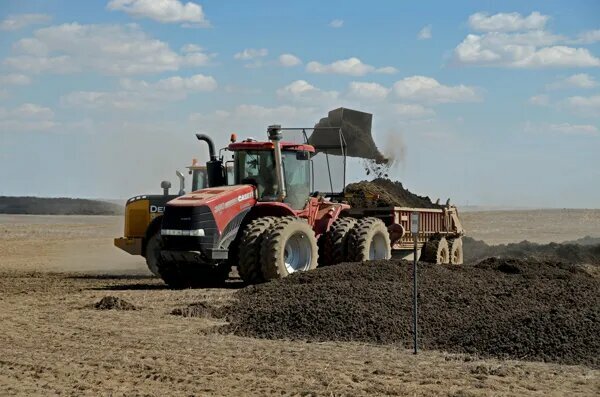
The Boulder Park Biosolids Contract is a five-year agreement between King County and many communities that collects biosolids from treatment plants and transports them to designated farmland on the Waterville Plateau.
“It’s a beneficial use plan to put the biosolids from our treatment plant – and lots of other treatment plants - up on the flat toward Mansfield,” said Public Works Director Lee Webster.
“The issue is new language was added to it that puts the city a little more at risk in terms of liability,” said city attorney Kaitlin Schilling. “The contract now says when you move biosolids away from the city it can still be liable if something goes wrong from where they are placed. Something in the biosolids that creates some kind of damage that might come back on the city.”
Schilling characterized that possibility as “fairly low risk” but brought the new terms to the attention of the council, nonetheless.
“It is a concern that our office flagged,” said Schilling. “We tried to get the language removed but they said ‘absolutely not, it’s got to stay in.’”
King County subcontracts trucks and equipment for the service, and Webster noted that King County accounts for more than half of the biosolid tonnage collected. Brewster’s portion represents a very small part of the total.
“We are looking for options at what we can do,” said Webster. “Worst case scenario we sign the contract and do it until we can do our own composting. That will take some time.”
Webster noted that when Wenatchee renewed its contract last year, the new language was not included in their renewal.
“I don’t know what happened when it came to us,” Webster said.
Councilmember Pedro de la Cerda wanted to know, in the event something did come back on the city if it would amount to just a small percentage since Brewster’s quantity of biosolids is so small compared to the aggregate amount.
“That’s part of the issue,” said Schilling. “We don’t know. We are not sure exactly how that would work and how they would pin it back to the city if it’s comingled at the site.”
Webster said the application sites are gridded and marked.
“They know exactly where our biosolids go,” said Webster. “It may say ‘Applied 10 tons from Brewster at site 24X at this time period,’ so we’d be liable for that little piece.”
Webster said the city is very diligent regarding the treatment process.
“What bugs me is we do all this work complying with our permit – the guys get an award almost every year for outstanding treatment plant work – but something shows up 10 years from now…and we have to pay for it,” Webster said.
The Boulder Park program, named after the area’s large haystack rocks, has been in existence since the early 1990s as a partnership between several Waterville Plateau farmers and King County. The goal is to provide high-quality biosolids applications for cropland.
More than thirty other agencies across Washington State also participate in the biosolids program.
“Boulder Park Project is one of the largest farmer-owned and operated, multi-farmer biosolids recycling projects in the United States, with more than 60 participating farmers and over 90,000 acres approved for application,” according to the King County Wastewater Treatment Division website, kingcountywtd.com.
The Washington State Department of Ecology strictly regulates the land application of biosolids. The products undergo testing to assess nutrients, pollutants, and pathogens to ensure conformity to safety standards for land applications.
Mike Maltais: 360-333-8483 or michael@ward.media


Comments
No comments on this item Please log in to comment by clicking here