Wednesday, October 21, 2026

There is a script running in all of our lives.
Most of it is invisible. It plays in the background, shaping how we interpret what we see, what we believe about other people, and what we tell ourselves when no one else is listening.
And for most of us, that script didn’t start as something we chose.
It formed over time. Through habits. Through assumptions. Through repetition. Through what we’ve been exposed to, what we’ve experienced, what we fear, and what we’ve convinced ourselves is true. It has been reinforced by headlines, social media, comment sections, and conversations that reward quick judgment and simple answers.
The problem is not that we have a script. The problem is when the script starts running us. You can see it in the way we talk to ourselves.
The inner voice many people live with is not gentle. It is sharp. It is impatient. It is often harsher than any friend would ever be. It keeps score. It replays failures. It magnifies flaws. It assumes the worst about what others think, and it rarely offers the benefit of the doubt.
We tell ourselves stories all day long. I’m behind. I’m not good enough. I’m failing. They don’t respect me. I don’t belong. I’ll never catch up.
Most people would never speak to someone else the way they speak to themselves. And that isn’t just sad. It is shaping.
Because the way you talk to yourself becomes the way you carry yourself. It becomes the posture you take into your relationships, your work, your parenting, your friendships. It changes what you believe is possible. It changes what you expect from others.
And it changes what you think you deserve.
But the script doesn’t only play inward. It also shows up in how we talk to others. It is easier than ever to speak in a way that dehumanizes. To reduce people to labels. To make assumptions. To speak with sarcasm, contempt, or certainty. To “win” a conversation instead of understand one.
We have become comfortable judging before we understand. That is one of the defining habits of our time.
We don’t wait for context. We don’t ask clarifying questions. We don’t pause long enough to consider that there may be more to the story. We see a clip and assume we know the whole meeting. We see a headline and assume we know the whole issue. We see one comment and assume we know the whole person.
The script says: react. The script says: defend. The script says: if someone disagrees with you, they must be ignorant or evil.
And once that script is running, it becomes harder and harder to hear anything else.
What makes this more complicated is that most of us don’t realize how much of the script is being written for us.
By algorithms.
Social platforms are not neutral. They are not simply showing you “what’s happening.” They are showing you what holds your attention. What provokes you. What keeps you scrolling. What reinforces what you already believe.
Over time, the algorithm becomes a mirror. But not a healthy mirror.
It doesn’t show you who you are at your best. It shows you what you linger on. What you click. What you react to. What you can’t look away from. It learns your triggers and then feeds them back to you. And it slowly reshapes your view of the world.
A person who spends enough time in a feed built on outrage starts to feel like the world is nothing but outrage. A person who consumes nonstop conflict starts to see conflict everywhere. A person who fills their attention with suspicion begins to trust less, not because people changed, but because their inputs did.
That is how your feed becomes your mindset. That is how the script becomes your reality.
So here is the hard question, and it’s one worth asking honestly: If someone picked up your phone and started scrolling through your social media feed, would you be embarrassed?
Not because of one random post. Not because of an ad that slipped through. But because the feed itself would reveal something about what you’ve been consuming. What you’ve been reinforcing. What you’ve been training your mind to focus on.
If the answer is yes, then it may be time to flip the script.
Because the feed you live in is forming you. It is shaping what you assume about people. It is shaping how you respond to disagreement. It is shaping how you interpret the world. And most of the time, it isn’t shaping you toward calm, patience, gratitude, or clarity.
It is shaping you toward reaction.
The good news is this: You can reset the algorithm.
Not by complaining about the world, but by being purposeful about what you allow into your mind. You can unfollow what makes you worse. You can mute what inflames you. You can stop giving attention to voices that train you to hate, mock, or assume the worst. You can replace constant outrage with content that teaches, encourages, challenges and strengthens. You can build a feed that reflects who you want to be, not who you become when you’re frustrated.
That isn’t weak. That is discipline. And discipline is the foundation of freedom.
The same is true in how we talk. We can flip the script in our self-talk. We can stop narrating our lives with constant criticism and start practicing honesty that leads to growth, not shame.
We can flip the script in our public conversations. We can slow down. We can ask one more question. We can choose to understand before we judge. We can speak to people like they are human beings, not avatars.
We can remember something that feels almost radical now: Being kind doesn’t mean being naive. It means being intentional.
A healthier life does not begin with everyone else changing. It begins when we change what we consume, what we repeat, what we assume, and what we reinforce.
It begins when we flip the script.
And start living by design instead of by default.
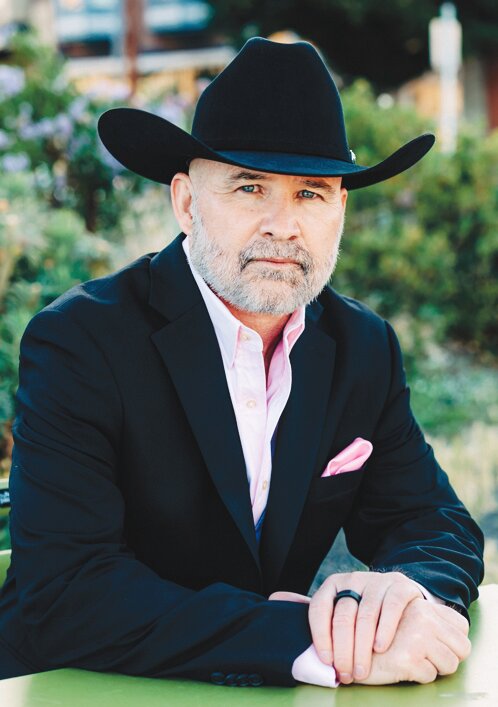
Terry Ward is the CEO of Ward Media and the publisher of NCW News, Cashmere Valley Record, Lake Chelan Mirror, The Leavenworth Echo, Quad City Herald, and the Wenatchee Business Journal. He can be reached at terry@ward.media.


Comments
No comments on this item Please log in to comment by clicking here